
The First Shield of Medical Software: Static Analysis According to IEC 62304
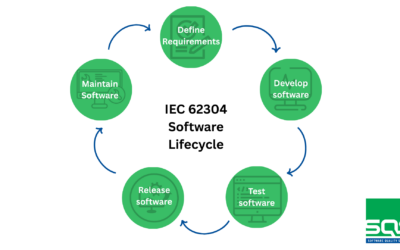
In the development of software for medical devices, it’s not enough for the code to work. Every line must be safe, maintainable, and traceable, because behind a bug there may be a real clinical risk. IEC 62304 (Class B and Class C software products) requires a rigorous approach: identifying and eliminating errors even before running the program.
This is where code static analysis comes in, specifically SAST (Static Application Security Testing), the first step to demonstrating quality and safety.
What Is Static Code Analysis?
Static analysis is like taking an X-ray of the code: it scans every line without executing it, searching for hidden issues that could escape traditional testing, such as coding-standard violations (e.g., MISRA C/C++ guidelines), security vulnerabilities (e.g., buffer overflows), highly convoluted code sections (potentially increasing error risk), or dead or duplicated code (increasing the risk of errors in future modifications).
Why It Is Recommended Starting from Class-B Software
Because ensuring that the code is correct is essential to reducing the likelihood that the software introduces failures that could create unexpected risks for the patient.
In class B and class C software, IEC 62304 requires more rigorous verification of design and code, making static analysis extremely useful as a complement to manual reviews.
In addition, IEC 62304 states that software from class B onward must:
- Be verified with techniques appropriate to the level of risk, where automated tools provide consistency, completeness, and objectivity.
- Generate documented evidence of all verification activities, so SAST automated reports offer clear and repeatable traceability.
How to Implement Effective Static Analysis
To be useful and compliant with the standard, static analysis must:
- Integrate into the development cycle
Ideally upon commit or with every build of the software. This allows early detection of errors and saves time in corrections.
- Configure rules according to standards
Guidelines such as MISRA C/C++, CERT C, or CWE help prioritize risks and critical errors.
- Generate clear reports
Understandable to auditors and to the development team, and including metrics for coverage, complexity, and number of defects per module.
- Document evidence
Evidence (report screenshots, reviews, fixes, and more) is essential to demonstrate traceability in accordance with IEC 62304 requirements.
Common Tools
In the field of medical software, static analysis tools are commonly used to improve code quality and systematically detect defects. Some of the most widely used include:
- SonarQube: continuous analysis, vulnerability detection, quality metrics.
- Cppcheck: specialized in static analysis for C/C++.
- Polyspace: formal analysis, MISRA checking, and exhaustive verification.
- CodeSonar: deep-level detection of critical errors and vulnerabilities.
These tools allow automating and standardizing analysis, meeting the requirement for repeatability and documentation.
Static analysis not only detects errors: it is proof that your software is structured to save lives. For medical software starting at class B, it is the first line of defense against hidden failures and the foundation on which all other testing is built. Without it, traceability, maintainability, and—above all—safety would be compromised.
Investing in solid SAST means saving time, avoiding risks, and improving the overall quality of the device.
SQS: Your Ally in Compliance and Validation
At SQS we support manufacturers and developers of healthcare technology throughout the entire life cycle of the software and the device. We help implement verification and validation processes in accordance with IEC 62304, integrating static analysis, software and hardware validation, usability, risk analysis, clinical performance verification, and complete review of technical documentation.